
Prairieville Directory Collections
The Prairieville city directory trail begins with confirmed collection categories, not guessed editions. Ascension Parish Library states that it holds city and parish directories and histories. The State Library confirms current and historical Louisiana city directories and telephone books. Neither public catalog supplied a complete Prairieville or Gonzales publisher-and-year run during research, so call before planning a shelf visit.
| Collection | Verified years | Where held | Access route |
|---|---|---|---|
| APL city and parish directories | Exact editions not published | Gonzales genealogy collection | Reference request; print or microfilm varies |
| Reverse or criss-cross books | No local run verified | Ask APL and State Library | Verify title and year before visiting |
| Louisiana city directories | Current and historical; local run not listed | State Library, Baton Rouge | Onsite research room; call ahead |
| Louisiana telephone books | Current and historical; local run not listed | State Library Louisiana Collection | Onsite shelf and staff help |
| APL digital local material | Growing project; no continuous run | Louisiana Digital Library | Online item search |
Ask the Gonzales desk for the shelf inventory, publisher, edition years, reverse section, and known gaps. Historical headings may use Gonzales, Donaldsonville, a rural route, or a post-office name.
Prairieville Directory Research at APL
The Ascension Parish Library genealogy collection is the local starting point. Its holdings include directories, parish histories, clippings, cemetery inscription books, biographies, family histories, church material, microfilm, and genealogy databases. Ancestry Library Edition is for in-library use. HeritageQuest supplies histories and finding aids, while HeritageHub supports obituary searches by name, date, text, affiliation, and geography.
The Gonzales branch at 708 S. Irma Boulevard is the main genealogy hub. Galvez at 40300 Highway 42 is the closest Prairieville branch. Call Gonzales at 225-647-3955 about the volume, then ask whether it can be used or transferred through Galvez at 225-622-3339. Staff can locate material but do not promise a full family or house history.
The official genealogy page shows the collection route used for a Prairieville city directory search.

The capture points to local finding aids and licensed resources while certified records stay with their custodians.
Verify Prairieville Directory Years
No official page reviewed gave a first Prairieville city directory year, final printed year, or continuous publisher run. Do not assume that a known national publisher issued a Prairieville edition. Do not treat a general Ascension history as an address directory.
Give the desk a surname, address, likely decade, and possible place heading. Ask whether the volume is alphabetical, includes a street-order section, has phone data, or uses rural routes. Request the title page and abbreviation key with the entry. Those pages establish the publisher, date, scope, and symbols.
Shelf request. Ask for publisher, title, edition year, address section, missing years, and the exact location of the volume or reel.
Read a Prairieville Directory Entry
A historical directory may arrange names alphabetically, addresses by street and number, or telephone numbers in their own order. The Library of Congress house-history guide confirms the common fields below. Local marks still depend on the volume. Photograph the title page, entry, reverse entry, and abbreviation key.
| Name | Often surname-first; test initials and spelling variants. |
|---|---|
| Household note | A spouse or family notation may appear, depending on the publisher. |
| Address | House number and street, or an older rural route or post-office label. |
| Occupation or business | A dated identity clue, not proof of later activity. |
| Telephone | A number or exchange where the edition includes phone listings. |
| Owner or widow mark | Interpret only through that edition's legend. |
- Criss-cross directory
- An address-first or phone-first section that moves from a place to a listed occupant.
- Householder index
- A name list centered on the person identified as the household's principal entry.
- Abbreviation key
- The volume's legend for residence, householder, boarding, widow, proprietor, and office marks.
The Library of Congress directory guide illustrates the method.
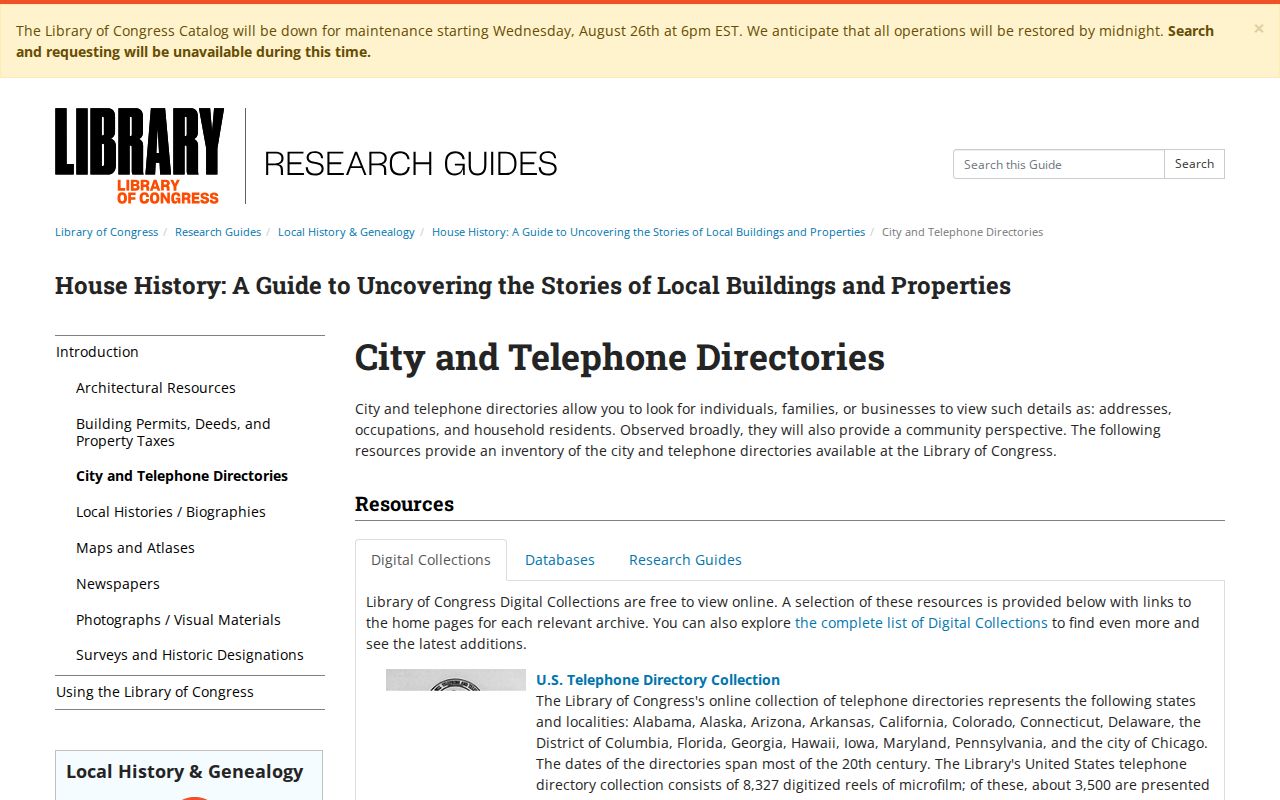
The guide supports the field list, while the exact Prairieville edition must still be checked at its holding library.
Prairieville Directory Memory Projects
APL's Preserving Our History project accepts photos, documents, yearbooks, church directories, advertisements, and oral histories for scanning and return. Voices of Ascension adds recorded memory. These are not a continuous directory run, yet they can reconnect a surname to a school, congregation, group, address, or event.
The Voices of Ascension project describes how local items enter the Louisiana Digital Consortium.

Item records may identify a creator, date, collection, or subject that can be tested against a directory entry.
Local historian Isabel Naquin and Assistant Director Christopher Achee are listed as project contacts, with 225-647-8924 as the phone route. Ask whether a family yearbook, church book, or photo set has been scanned.
Prairieville Directory Clues Statewide
The State Library Louisiana Collection holds directories, phone books, newspapers, maps, WPA material, parish microfilm, census sources, military material, and vertical files. Its fifth-floor room in Baton Rouge is the next shelf when APL cannot confirm an edition. Research hours are generally 10 a.m. to 2 p.m. Monday through Thursday, but call 225-342-4913 first.
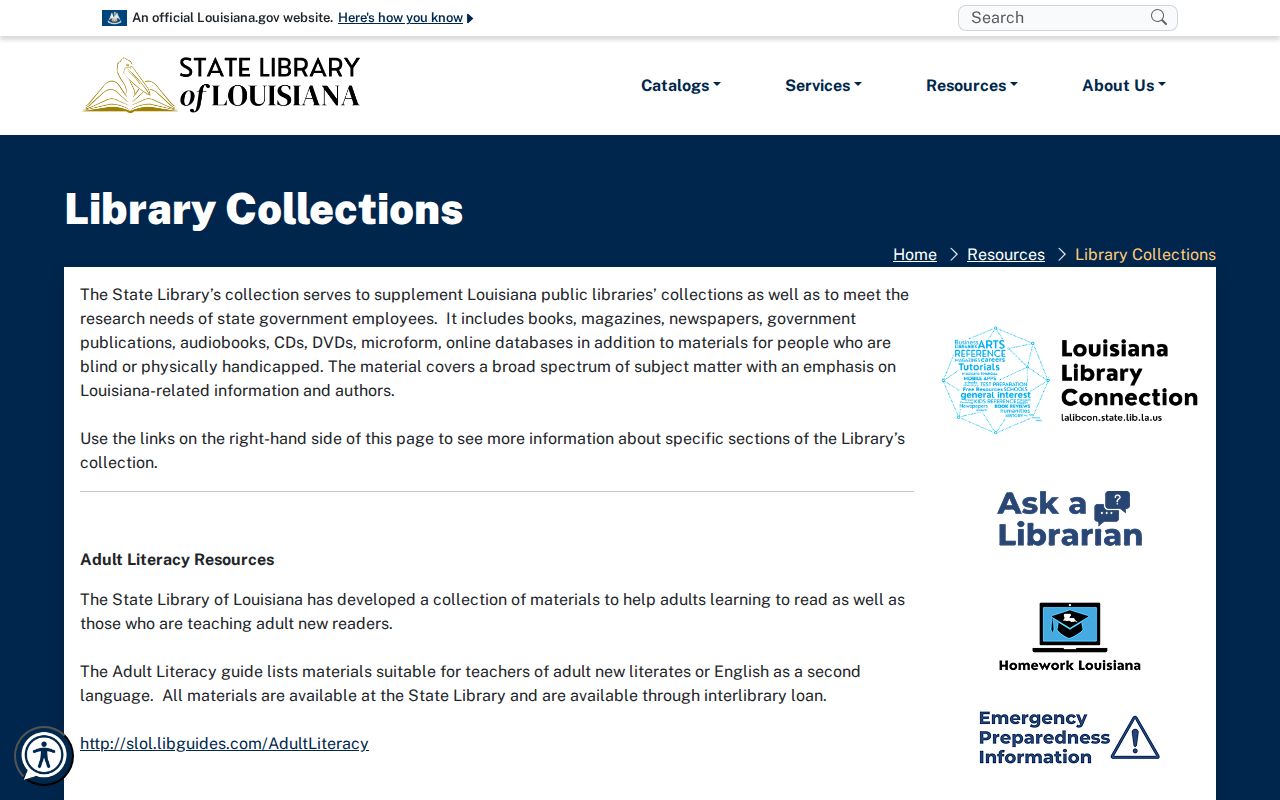
The capture confirms a broad Louisiana directory collection without claiming an unverified local year run.
The Louisiana State Archives catalog covers family histories, census, church records, assessments, colonial records, military files, land-office material, and finding aids. The research library is at 3851 Essen Lane in Baton Rouge, with genealogy help at 225-922-1208.
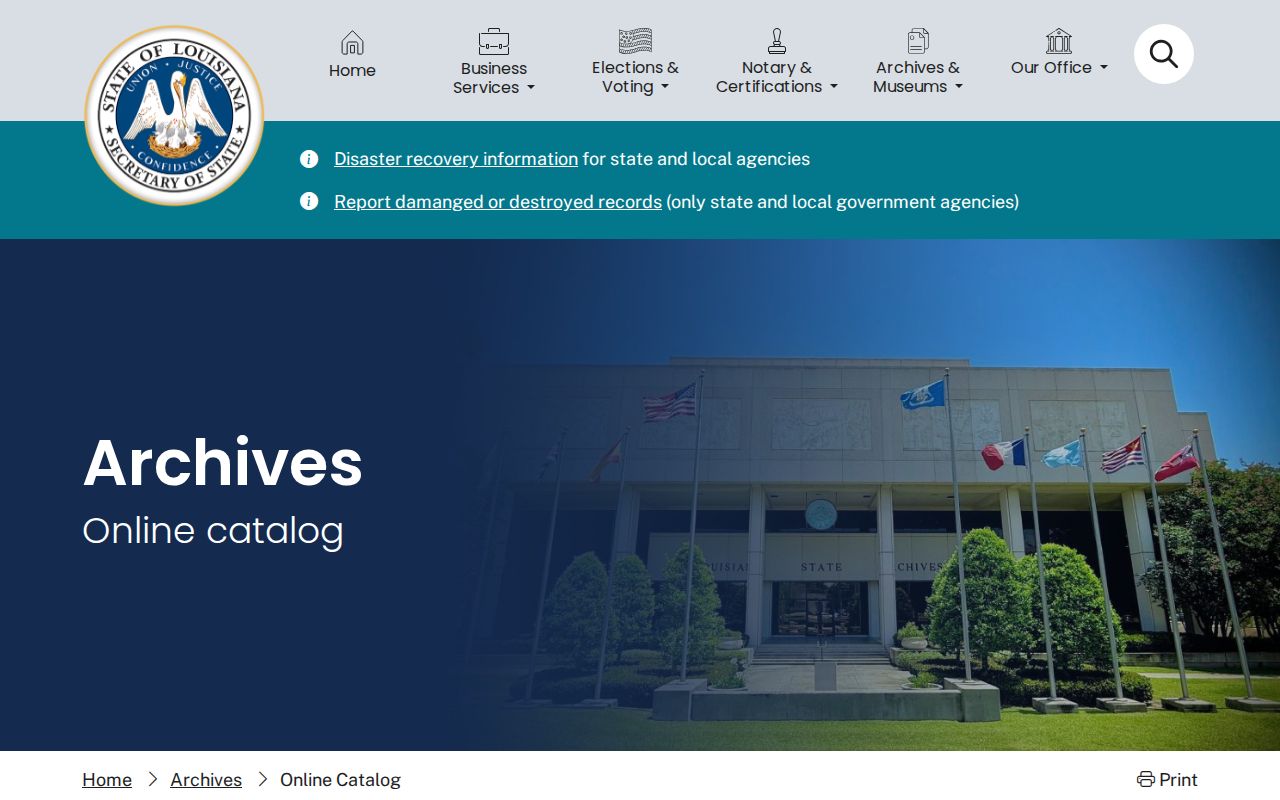
The catalog is a fallback for a surname, church, map, or parish term absent from a local shelf list.
Prairieville's Layered Record Timeline
Directory research sits inside an older Ascension record landscape. The sequence explains why a name can appear in an index but lack a web image or modern street label.
| Year or span | Verified record marker |
|---|---|
| 1770-1787 | Louis Judice notarial acts predate the modern parish system. |
| 1807 | Ascension became an original territorial parish; Clerk map coverage begins here. |
| 1770-1957 | FamilySearch lists 179,887 Ascension conveyance records. |
| 1773-1963 | FamilySearch lists 39,970 Ascension marriage records. |
| 1914 forward | The archived Clerk table lists mortgage indexing. |
| July 1970 forward | The archived Clerk table lists vendor and vendee land indexes and images. |
The numbers show the difference between an index, an image, and a directory shelf. Earlier spellings, estate names, and nearby headings may be needed.
Prairieville Names Beyond Directories
The Library of Congress Donaldsonville Chief collection reaches back to 1871, while the East Ascension Encounter begins in 1977. Search a surname, street, church, school, business, or group. Obituaries, notices, officer lists, and community news can explain a move or identity found in a Prairieville city directory.
A newspaper item is not a certified record. Save the title, date, page, column, and exact name form, then verify the event through the Clerk, vital-record custodian, deed index, or another official source. No complete official Prairieville cemetery database was found.
Trace Family Through Prairieville Directories
A city directory entry gains value when placed between census schedules and land records. A current parcel supplies a legal description. A directory provides a dated name-and-address clue. A released census may show the historical household, while a deed, marriage, obituary, or succession closes the official chain.
- Begin with the latest known name and address. Save spelling variants, initials, maiden names, and any rural-route label.
- Find the alphabetical entry, then check the reverse section. Photograph the title page and key with both entries.
- Move one edition at a time. Note arrivals, absences, address changes, and changed household notation without guessing why.
- Pair years around the 1930, 1940, and 1950 census schedules. The 1950 schedule is the latest released under the 72-year rule.
- Confirm the parcel through the grantor and grantee index. Finish with marriage, obituary, succession, cemetery, or later deed evidence.
Disappearance can mean a move, death, publication gap, changed surname, unlisted phone, rural-route shift, or missed transcription. Search surrounding years, then test the explanation in newspapers, deeds, census schedules, and vital indexes.
For present parcels and current address records, use the Prairieville street directory instead of forcing an old volume to answer a modern question.