
Prairieville Neighbors by Block
Public sources describe parcels and civic ties more reliably than households. The Ascension GIS can show which lots touch a Prairieville address. Assessor records add owner and mailing fields. The voter portal can answer a lawful query for a supplied address, while neighborhood groups publish contacts, rules, and events rather than open member rosters. Keeping those roles separate is the core of an accurate neighbors lookup.
| Source | What it shows about a block | Access route |
|---|---|---|
| Ascension GIS parcel service | Adjacent polygons, parcel IDs, situs and owner fields, lots, districts, zoning, flood and code layers | Public map and REST service; narrow the query |
| Assessor Beacon | Owner, address, subdivision, parcel and assessment details | Public Assessor-linked search |
| Clerk land records | Deeds, mortgages, maps, plats and prior names for one parcel | Online account, office terminal, and copy request |
| Louisiana Voter Portal | Registered-voter information for a supplied address | Public form; not a block-wide roster |
| Community associations | Board contacts, meetings, rules, projects and events | Public pages plus restricted member areas |
An owner name does not establish every occupant. A voter result does not list children, unregistered adults, protected voters, or every person at an address. State the narrow fact each source supports, with its access date.
Map Adjacent Prairieville Parcels
The Ascension Parish GIS viewer is the practical starting point. Its official parcel service supports geometry, distance, spatial queries, statistics, and GeoJSON. Search or pan to the known address, select its parcel polygon, and capture the `PN_Join` parcel key. Then inspect the polygons that touch it or select a tight map extent.
- Locate the physical address and confirm its parcel number, lot, block, subdivision, and ZIP.
- Click each adjoining polygon or use a small geometry or distance query. Save the parcel keys before opening detail rows.
- Compare owner name and mailing fields with the physical or situs fields. Keep them in separate columns.
- Turn on address, lot, subdivision, zoning, flood, district, and code-enforcement layers only as needed.
- Use the Clerk's deed or plat when title and boundary precision matter; the GIS polygon is not a survey.
The service returns no more than 2,000 records, so a parish-wide request is too broad. A single block, subdivision, street segment, ZIP, or map extent gives a cleaner result. For a full named road rather than the immediate radius, use the Prairieville Street Directory.
Separate Prairieville Address Fields
The GIS schema exposes `Owner_Address` and `Owner_CityStateZipCode` apart from `Address_Number`, `Street_Name`, and the physical city, state, and ZIP. That split matters when researching Prairieville neighbors. An owner may receive mail through a post-office box, agent, estate, trust, or another town. The parcel's situs fields locate the tract, but they do not name all people inside it.
| Field group | Safe reading |
|---|---|
| Owner name and mailing address | Who the assessment roll names and where notices are sent |
| Physical or situs address | Where the parcel is located |
| Prior owner and sale data | Clues to a recorded transfer, subject to deed confirmation |
| Homestead exemption | An assessment clue, not a full occupancy roll |
| Parcel polygon | A mapping aid, not a surveyed legal boundary |
Preserve both address sets before deciding how a name connects to the block. A mismatch is a prompt for deed review, not proof of current residence.
Layers Explain a Prairieville Block
The parish OpenGov service lists address points, lots, subdivisions, flood structures, code-enforcement cases, city-limit status, traffic and council districts, sewer districts, zoning, and flood layers. These layers explain why two adjacent parcels may fall under different rules or have different histories. They should not be used to infer facts about the people on them.
Ascension Planning and Development is the source linked to the successful page capture for permits and planning.
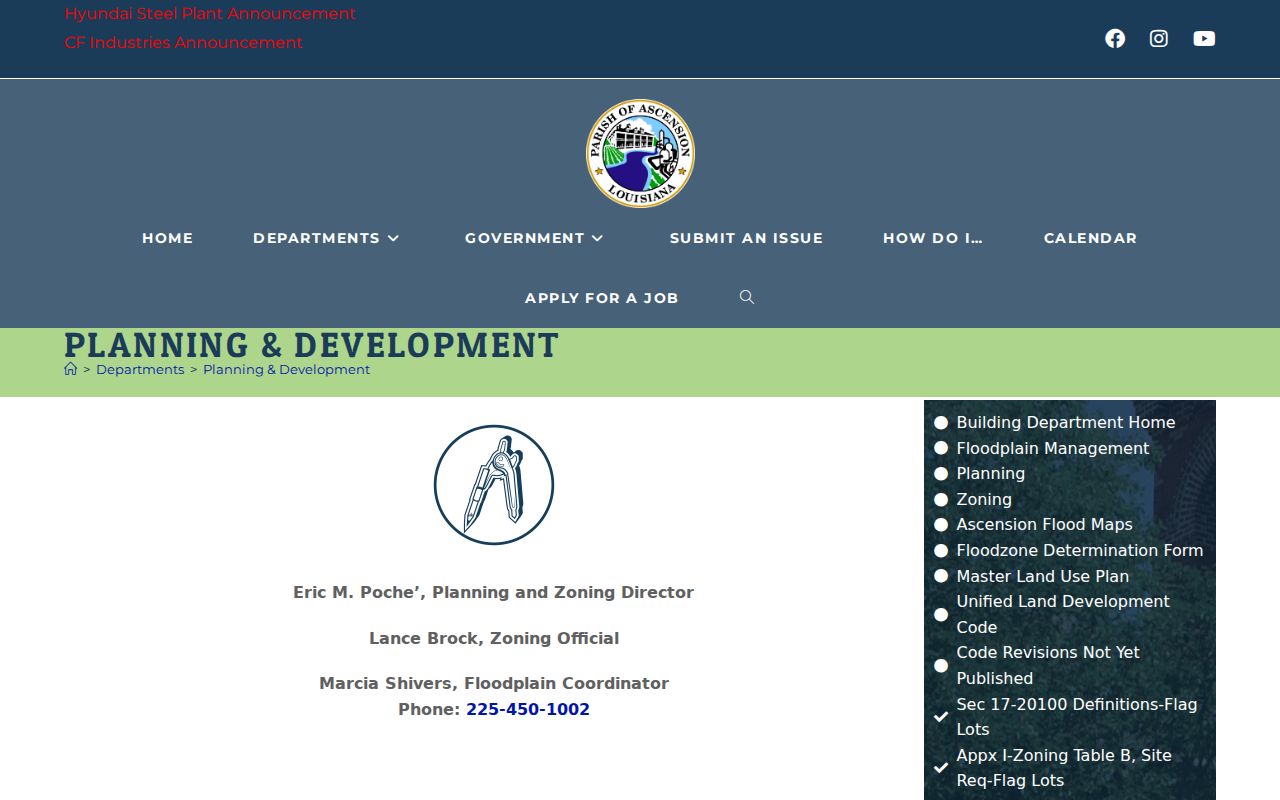
The planning route can help identify the right custodian for a parcel-specific permit request when no full public case search is exposed.
Prairieville is unincorporated. Parish geography, not a Prairieville city hall, controls most of these official layers. Subdivision names, USPS labels, Census boundaries, and legal place descriptions answer different questions, even when each appears in the same record row.
Prairieville Voters by Address
The Louisiana Voter Portal address form asks for ZIP and street address, with apartment or lot and city fields. It can return public voter information tied to that query. The portal deliberately does not present voter and address records as one open, linked resident list. It withholds full birth dates, Social Security numbers, email, mother's maiden name, ballot choices, and protected addresses.
A formal voter-list request follows a different route. The published specification allows fields such as residence and mailing address, name, ward, precinct, districts, status, registration date, phone, and last-vote date, subject to its order rules and legal limits. Even that file is not an unrestricted roster of every person on a Prairieville block.
Read the result narrowly. Registration at an address does not prove that every neighbor is registered or that a listed voter still lives there.
Prairieville's Association Contacts
Community sites add a voluntary civic layer. They may publish board contacts, covenants, budgets, event dates, road contacts, or architectural rules. The research found no parish-wide association directory and no public block-watch roster. These pages should be treated as contact sources, never as resident rolls.
| Community | Public information | Roster status |
|---|---|---|
| Manchac Crossing HOA | Alerts, photos, events, and dues | Household participation requires an account |
| Twelve Oaks of Ascension | HOA identity, notices, dues, and architectural route | No public member directory found |
| Eagles Landing | Board, committees, meetings, budgets, and document history | No public member directory found |
| Prairie Oaks | Committees, park and architectural contacts | Resident access requires approval |
| Brookstone | Governing documents, minutes, and payment route | Owner portal is restricted |
The Manchac Crossing community site shows the kind of neighborhood information available to the public.
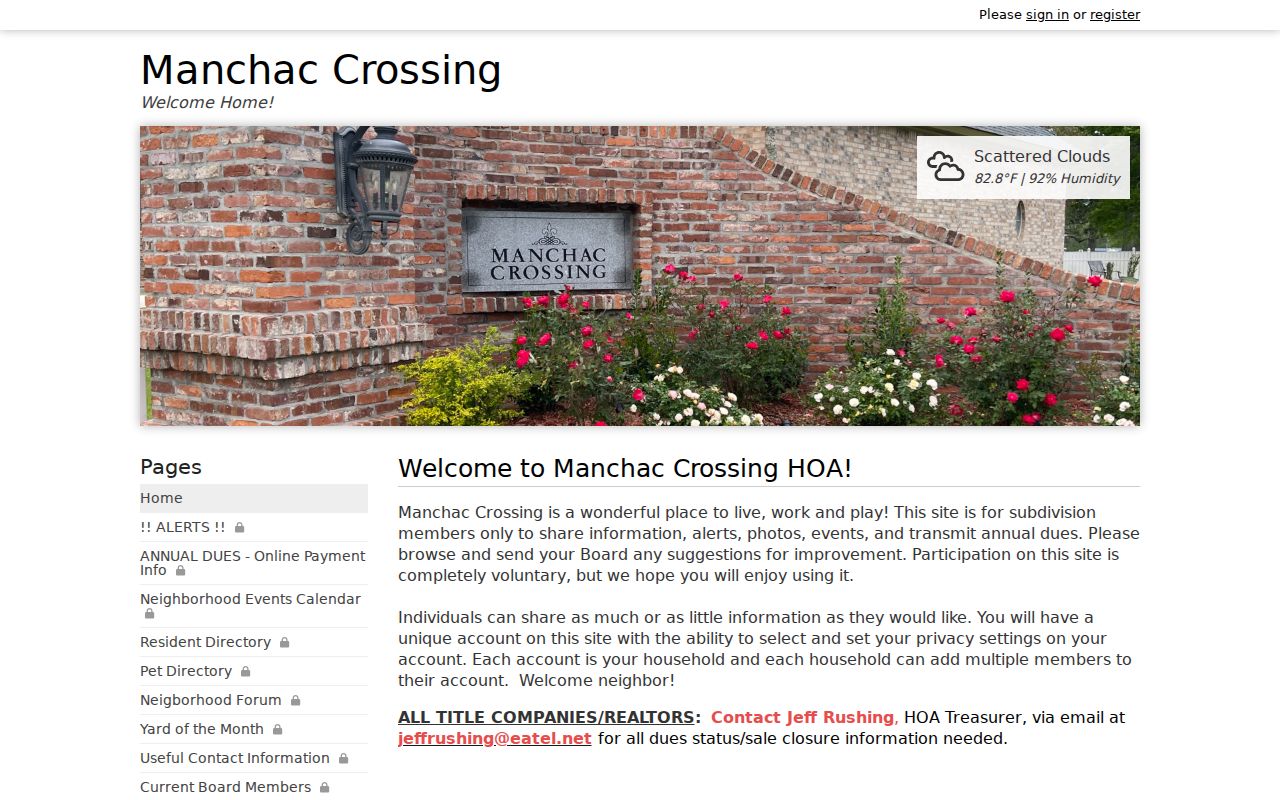
Its public layer supports community contact and event research, not a claim about who occupies each home.
Twelve Oaks community information provides another official association contact route.
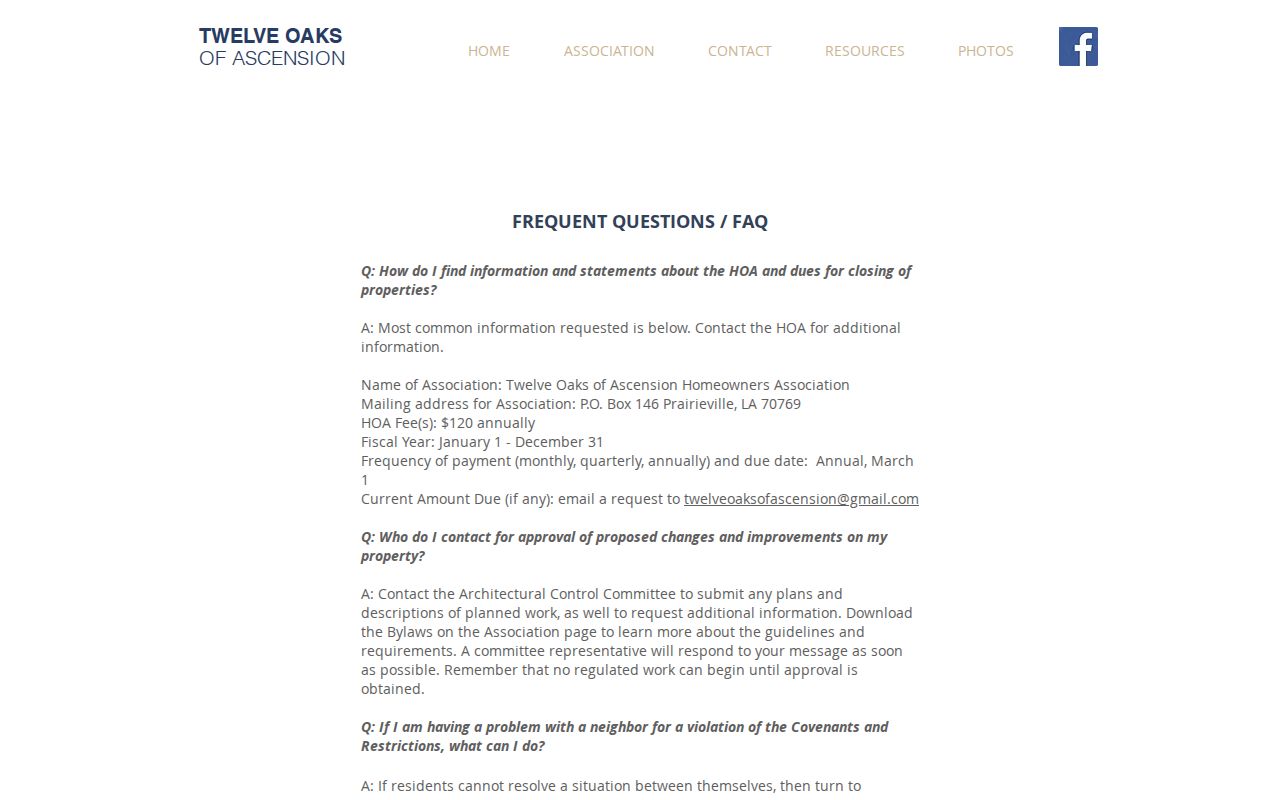
The page helps verify association procedures while leaving household membership private.
Choose Official Prairieville Records
Commercial neighbor tools often merge public records, broker data, and social profiles. Their speed comes with a cost: stale addresses, combined same-name records, unclear update dates, and weak source detail. Official parish records are narrower, but each has a named custodian and a defined purpose.
| Question | Official record | Commercial category |
|---|---|---|
| Who owns this parcel? | Assessor roll, then Clerk deed | May repeat an old owner without source date |
| Which lots touch it? | Parish GIS, then plat for precision | Map method may be unclear |
| Who is registered at one address? | State voter form with protected fields withheld | May blend voter and broker data |
| Who leads the association? | Association's own public contact page | May list stale contacts |
Use the official record first, note its limits, and contact the custodian when a detail is wrong. Removing a listing from a commercial service does not erase the original government record.
Protect Your Prairieville Neighbors
A block lookup cannot reveal every renter, child, guest, or household member. Utility and delivery records are not public resident directories. Louisiana's Address Confidentiality Program protects the physical address and telephone number of qualifying survivors who use its substitute-address process. Motor-vehicle addresses and sensitive voter fields also remain outside ordinary public access.
Use Prairieville neighbor records for civic curiosity, community contact, property questions, or personal safety awareness. Do not publish a block list or use gaps to guess at a protected address. Louisiana law prohibits stalking and cyberstalking conduct meant to alarm, threaten, terrify, or harass.
Lawful use. Keep every Prairieville neighbors search respectful and source-based. Never use public records to watch, intimidate, or harm another person.